
 Medically reviewed by: Dr. Sharun Abey Kurian , consultant plastic, reconstructive, and aesthetic surgeon - Written by Riya Yacob - Updated on 30/9/2026
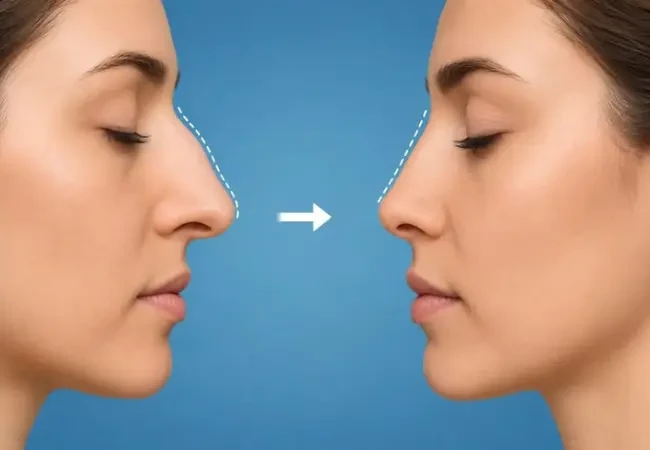
Yes, you can change the shape of your nose through nose reshaping surgery, medically known as rhinoplasty. This procedure can reduce a hump, narrow a wide bridge, refine a drooping or round tip, and correct a crooked nose. When nasal blockage is also present, a related procedure called septorhinoplasty corrects breathing difficulties alongside the external shape, giving patients both form and function in one surgery.
Many people notice something about their nose that bothers them, whether it is a bump they see in photographs or a tip that never quite sits the way they would like. Noses can be reshaped, and nose reshaping surgery has become one of the more established procedures in plastic surgery today.
Rhinoplasty is a type of nose surgery performed to alter the shape and appearance of the nose. It is, in the simplest sense, a surgical correction of the nasal structure. The nose is made up of bone, cartilage, and skin, and a surgeon works with these components depending on what needs to change.
If the bridge has a visible bump or the nose appears wider than desired, rhinoplasty can reshape these features to improve facial proportion. And if the tip is drooping, rounded, or sitting off to one side, it can be refined and corrected. Because every nose is shaped differently, rhinoplasty surgery is never a single fixed technique. It is adjusted to the patient’s nasal structure according to the changes being considered.
This is also why the procedure is sometimes called nose surgery or cosmetic nose surgery in everyday conversation, even though rhinoplasty is the clinical term surgeons use.
Yes, it can, but the procedure has a slightly different name when breathing is involved. That surgery is called septorhinoplasty.
The septum sits at the centre of the nose and provides its internal support. It divides the nasal passage into two sides, left and right. When the septum becomes deviated or crooked, whether from birth, growth, or an injury, it commonly leads to nasal blockage or ongoing difficulty breathing through the nose. Septorhinoplasty addresses this by correcting the deviation, restoring easier airflow, while also correcting or reshaping the external appearance of the nose at the same time. In effect, one surgery deals with both the way the nose looks and the way it functions.
This approach may be suitable for patients who have both long-standing breathing difficulties and concerns about the appearance of their nose.
| Aspect | Rhinoplasty | Septorhinoplasty |
| Main goal | Reshape external appearance | Reshape appearance and correct internal breathing |
| Structures involved | Bone and cartilage of the outer nose | Outer nose plus the septum |
| Typical patient concern | Hump, width, tip shape, symmetry | Above concerns plus nasal blockage or difficulty breathing |
| Functional benefit | Mainly cosmetic | Cosmetic and functional |
| Common technique | Open or closed nasal reshaping surgery | Combined septal correction with open or closed technique |
A thorough consultation examines the nose’s bone and cartilage structure and checks breathing function before deciding on the surgical approach. Photographs, sometimes imaging, and a discussion about the changes that are realistically achievable based on your nasal structure.
The surgical technique may involve an open or closed approach, based on the specific changes required. Open techniques involve a small incision at the base of the nose between the nostrils, giving fuller access for more complex reshaping. Closed techniques keep incisions hidden inside the nostrils, which can mean less visible scarring for simpler corrections.
Patients may experience temporary swelling and light bruising around the eyes during the early recovery period. A splint usually stays on the nose for about a week to protect its new shape while initial healing takes place. Most people return to non-strenuous daily activities within one to two weeks, though the nose continues to settle and refine its final shape gradually over several months.
Rhinoplasty and septorhinoplasty are generally suitable for adults whose facial growth has finished, typically from the mid-teens onward depending on individual development, and who are in good general health. People with realistic expectations about what surgery can change, and an understanding that healing takes time, usually have the smoothest experience. A consultation with a plastic and reconstructive surgeon remains the best way to know whether you are a suitable candidate, since nasal anatomy differs so much from person to person.
Nose reshaping is one of the most frequently performed procedures in plastic surgery, helping patients address both appearance and proportion. Whether the goal is reducing a hump, narrowing a wide bridge, correcting a crooked tip, or resolving nasal blockage alongside those cosmetic changes, nose reshaping surgery can address these concerns depending on the patient’s anatomy and treatment goals. Septorhinoplasty extends that further for patients whose concerns include both appearance and breathing.
If you have been considering cosmetic nose surgery or want to understand whether septorhinoplasty is right for you, the team at EMC Hospital is here to talk through your options. Book a consultation with our plastic, reconstructive, and aesthetic surgery department to discuss what changes are realistic for your nose and how we can help you get there.
Q1: What is the difference between rhinoplasty and septorhinoplasty?
A1: Rhinoplasty changes the external shape of the nose by working on its bone and cartilage, while septorhinoplasty does the same thing but also corrects a deviated or crooked septum, which is the internal structure that often causes nasal blockage or breathing difficulty.
Q2: How long does it take to see the final results of nose reshaping surgery?
A2: Initial swelling settles within a few weeks, and most of the visible shape becomes clear around three to six months after surgery, though very fine changes in the tip can continue to refine for up to a year in some patients.
Q3: Can rhinoplasty fix breathing problems on its own?
A3: Standard rhinoplasty focuses mainly on appearance. If breathing difficulty is due to a narrow internal nasal valve, it may be corrected during a routine rhinoplasty. If breathing difficulty comes from a deviated septum, septorhinoplasty is the procedure that addresses both the internal blockage and the external shape together.
Q4: Is nose reshaping surgery painful?
A4: Most patients describe more pressure and stuffiness than sharp pain, and this is usually managed well with prescribed medication during the first few days of recovery.
Q5: At what age can someone have rhinoplasty?
A5: Surgeons generally wait until facial growth is complete, which is often from the mid-teens onward for females and slightly later for males, though this always depends on individual development and is confirmed during consultation.
Discover how rhinoplasty and septorhinoplasty can reshape the nose, correct nasal issues, and improve both appearance and breathing.

Understand migraine symptoms, how they differ from common headaches, common migraine types, warning signs, and when to seek medical care.
Learn about key speech milestones by age and discover how to support your child's speech and language development at home.
Gender affirmation surgery explained - the process, the risks, and what recovery really looks like, with guidance from EMC Hospital.
Learn the best snake bite treatment, including first aid, emergency care, antivenom, symptoms, and essential steps to take after a snake bite.

Learn why fatty liver disease is increasing among young adults, the key risk factors, early warning signs, and steps to support better liver health.

Leptospirosis cases rise sharply during monsoon due to floodwater and rat urine exposure. Learn the symptoms, causes, treatment and prevention tips here.

Healthcare banner illustrating thyroid disorders in women with hormone balance, thyroid screening, and early diagnosis concepts.
Learn how to identify kidney stones, recognize early symptoms, understand the causes, diagnosis, treatment options, and tips to prevent recurrence.

Learn the 10 warning signs you should never ignore, from unexplained weight loss to persistent cough and chest pain. Know when to seek medical attention.

 Mail
Mail  Booking
 WhatApp